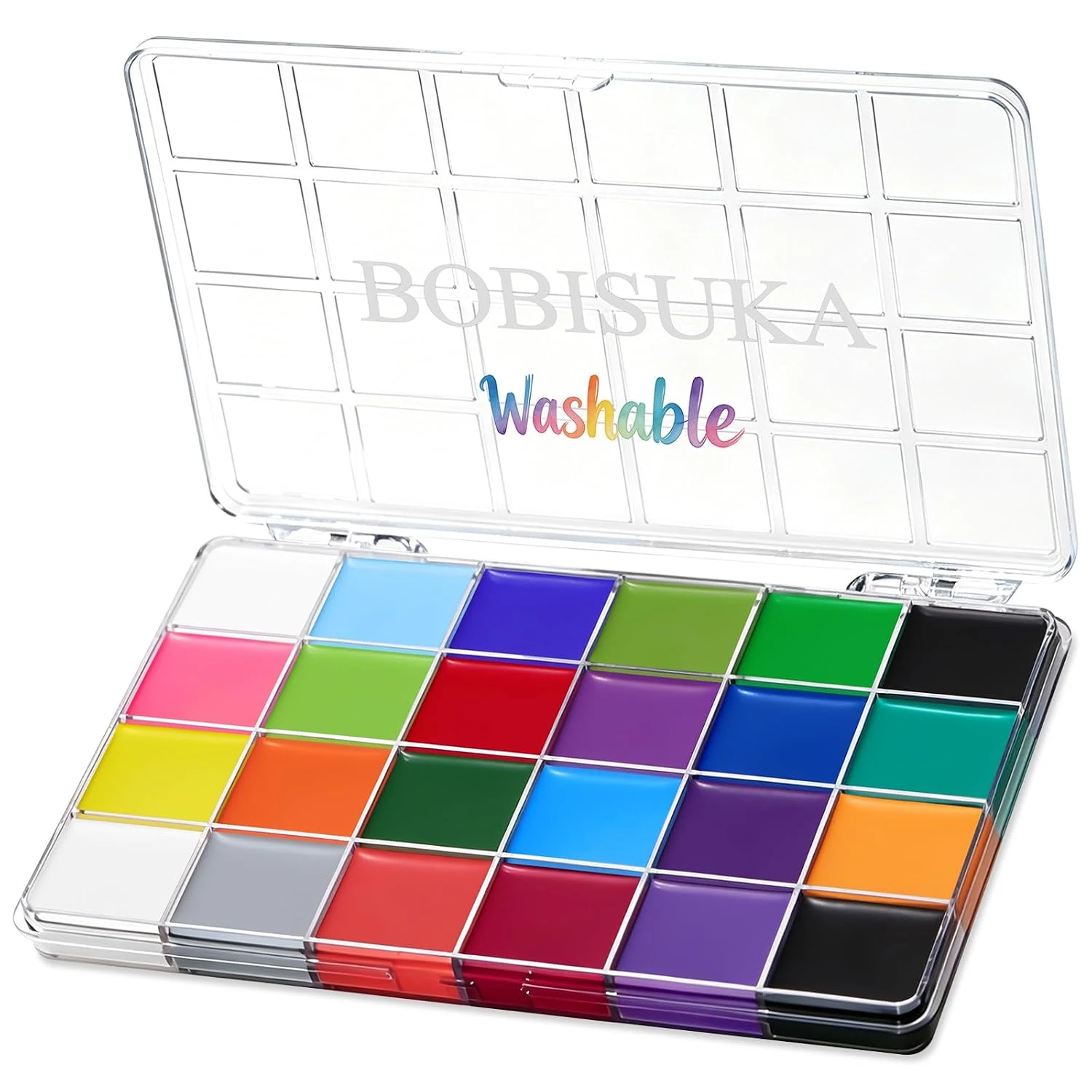
24 Colors Water Activated Face Body Paint Palette
24 shades · water-activated
4.1 out of 5
$14.99
See What's Inside on Amazon
What the regulator actually says about colour on skin, why the neon rule exists, and the removal that most people get wrong.
This page is about safety rather than technique, and it is short on opinion because there is a regulator with a published position on almost all of it. Where that position exists, it is quoted here in full rather than summarised.
None of what follows is medical advice. If skin reacts badly to something, the people to ask are a doctor and the regulator, in that order.
If you're decorating your skin with something you've never used before, you might try a dab of it on your arm for a couple of days to check for an allergic reaction BEFORE you put it on your face.U.S. Food and Drug Administration, Novelty Makeup, read 19 September 2026.
Two days, not two minutes. Contact reactions to cosmetic pigment are usually delayed, so a dab that looks fine after ten minutes tells you very little. The inside of a forearm is the usual spot because the skin there is thin and it is easy to keep an eye on.
This matters more the night you actually need the face to work. A reaction found on a Thursday is an inconvenience. The same one found at seven on Saturday evening ends the evening.
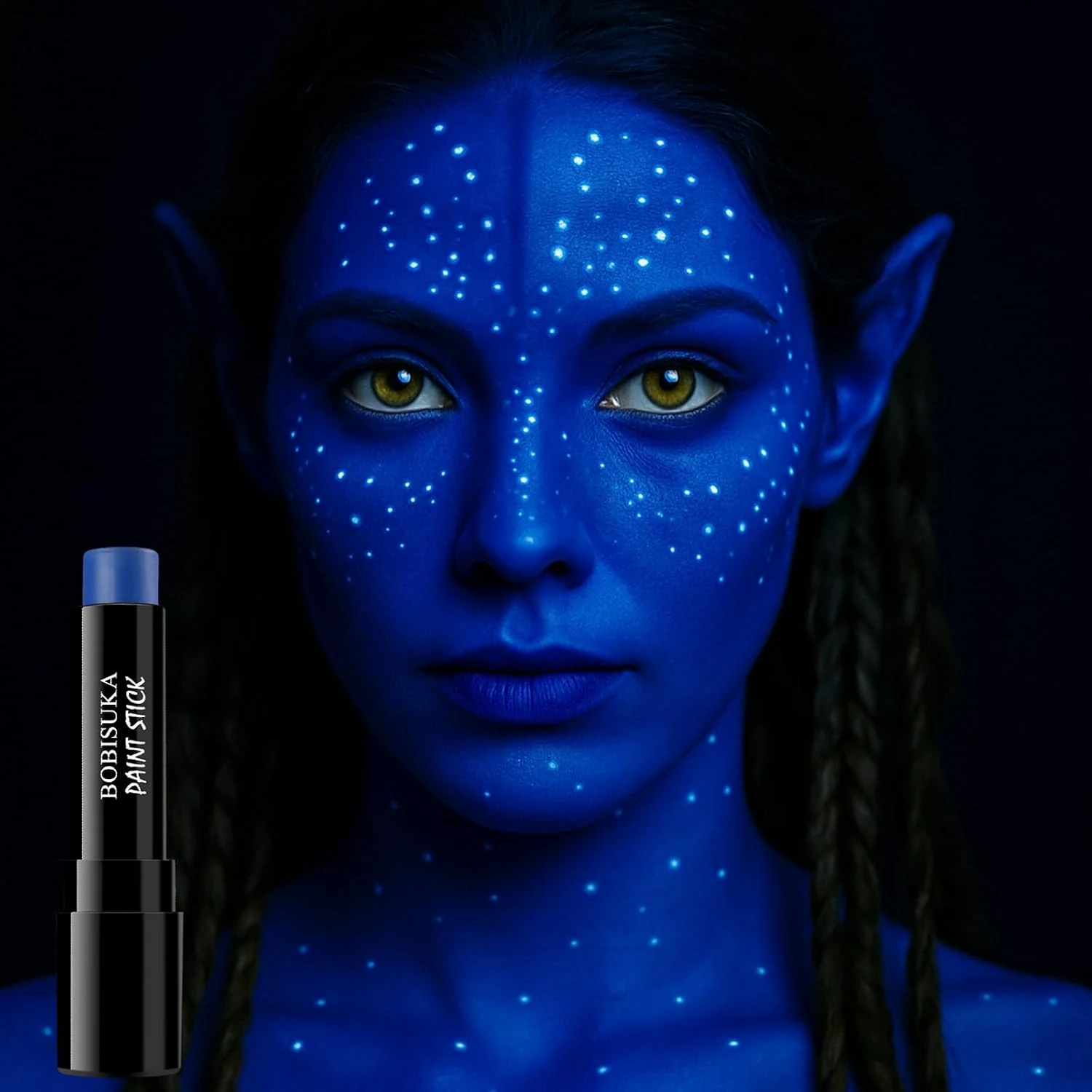
The pigments in cosmetic face paint are not a free-for-all. The law says that color additives have to be approved by FDA for use in cosmetics, including color additives in face paints and other cosmetics that may be used around Halloween time.
The approval is also narrow: a colour that is cleared for skin generally is not automatically cleared for use near the eyes, and the published list says which is which.
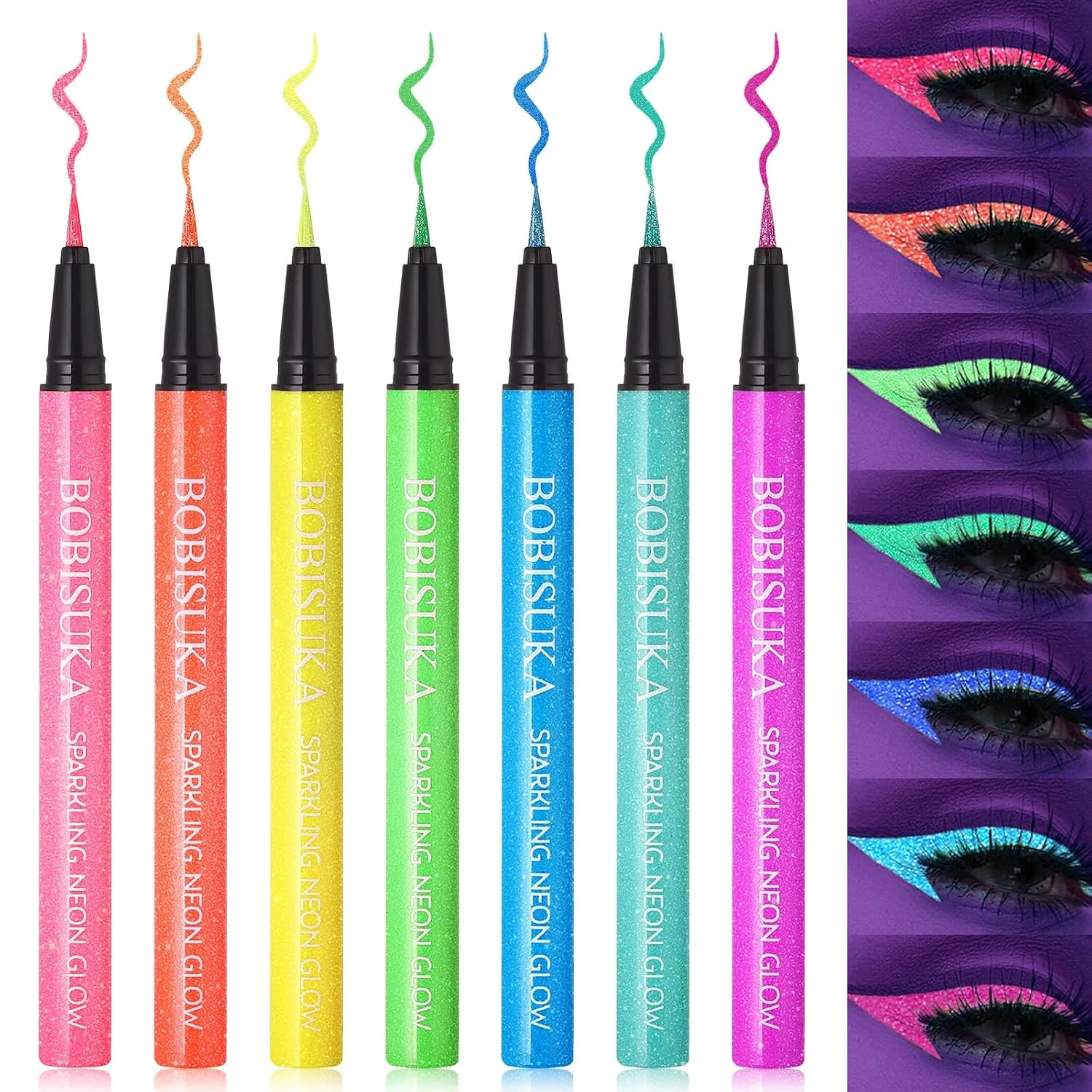
There are eight fluorescent colors approved for cosmetics, and like other colors, there are limits on how they may be used. None of them are allowed for use near the eyes.
That is the whole reason a neon liner or a UV paint carries a keep-away-from-eyes line on the label while an ordinary red does not. It is not a manufacturer being cautious. It is the terms of the approval.
Glow-in-the-dark is narrower still: In August 2000, FDA approved luminescent zinc sulfide for limited cosmetic use.
It is the only one, and it is also not for near the eyes.
24 shades · water-activated
4.1 out of 5Removal is where most of the damage happens, and almost all of it is avoidable. The regulator's line is short: How you take the stuff off is as important as how you put it on. Remove it the way the label says.
In practice that means soap and warm water for a water-activated cake, and an oil, a balm or a cold cream for anything oil-based. Soap on oil paint moves the pigment around the face instead of lifting it, and the natural response to that is to scrub harder, which is how a painted evening turns into a sore face on Sunday.
Take the eye area last and take it gently. The skin there is thinner than the rest and it is the part that will still be complaining on Monday.
The practical order is: take the heaviest layer off first with whatever the label names, then wash, then leave the eye area until last.
If a colour has stained, leave it. Skin turns over on its own within a day or two, and scrubbing a stain is how a painted evening becomes a sore weekend.

If your face paint has a very bad smell, this could be a sign that it is contaminated.Throw it away rather than risk it.
Of the 269 pieces on this site, 101 say washable on the packaging and 187 say non-toxic. Those are the manufacturer's words on the product, printed here as they appear, and they are not a certificate of anything. We do not publish test reports, and where a piece says nothing on a point, we say nothing either.
This is not medical advice. If a reaction appears, stop using the product, wash the area gently, and speak to a doctor. Reactions to cosmetics can also be reported to the FDA.